Quick Answer: Kitchen drains usually clog from grease, food solids, and coffee grounds that cool and harden along the P-trap and disposal line. Bathroom drains clog from hair tangled with soap scum, a sticky film that forms when soap reacts with hard water minerals. The two buildups behave differently under pressure and under chemicals, so an isolated hair clog near a drain opening often responds to a cable or snake, while a grease-coated kitchen line usually needs something that scours the full pipe wall, like hydro jetting. Treating both clogs the same way is a common reason the fix doesn't hold.
Your kitchen sink backs up on a Tuesday night, right after a pot of pasta water goes down the drain. Two weeks later your bathroom sink starts draining slow too, the water pooling around your ankles in the shower before it finally clears. Same house, same plumbing system, and two clogs that have almost nothing in common.
One clump is grease that hardened inside the pipe. The other is a mat of hair bound together with soap residue. Pour the same bottle of store-bought cleaner down each drain and don't expect the same result, because you're not actually fighting the same problem twice.
Two Clogs Built From Two Different Materials
Plumbers stop calling every clog "a clog" pretty quickly. What blocks a kitchen line and what blocks a bathroom line come from entirely different sources, cling to pipe walls in different ways, and call for different tools to remove. A drain that only sees dish water and food scraps builds a coating that behaves nothing like the tangle collecting under a bathroom sink stopper.
That difference matters more than it sounds. A method built to break apart grease can miss a hair clog entirely. A tool built to grab hair might barely touch a pipe lined with hardened fat. Knowing which one you're dealing with changes what actually works.
What Builds Up Inside a Kitchen Drain
Grease And Cooking Fat
Fat and oil pour down the drain as a liquid, warm from the pan. It doesn't stay that way. As it moves through the pipe and away from the heat of the sink, it cools and starts to solidify, sticking to the interior walls, especially around bends like the P-trap under the sink. Every rinse adds another thin layer on top of the last one until the opening left for water keeps shrinking.
Food Solids And Starches
Rice, pasta, coffee grounds, and eggshells don't dissolve, and several of them swell when they sit in water. Caught in a grease-lined pipe, these particles pack together instead of washing through, the way lint collects in a dryer vent already coated with dust.
Garbage Disposal Debris
A disposal grinds food into smaller pieces, but it doesn't remove grease, and smaller pieces can actually pack tighter into a pipe that's already narrowed by fat buildup. Running a disposal without enough water flowing behind it pushes ground food straight into that coating instead of past it.
Older homes throughout the West Valley add another layer to this. Many kitchens plumbed decades ago have narrower trap arms than what's installed today, leaving less room for grease to build up before flow slows down.
What Builds Up Inside a Bathroom Drain
Hair
Every shower and every sink use sheds some. It catches on the drain stopper or crossbar first, and once a few strands hang up there, more hair tangles around what's already caught.
Soap Scum
Soap contains fatty acids that react with minerals in hard water, mainly calcium and magnesium, common throughout Arizona's water supply. That reaction leaves behind a tacky film that lines the inside of the pipe. Hair gets trapped in that film the way insects stick to flypaper, and the combination hardens into something closer to felt than a simple clog.
Personal Care Residue
Toothpaste, shaving cream, and lotion add to the buildup layer by layer, giving the hair and soap scum something else to bind to.
None of this is oil-based. It's mineral and protein, and that distinction is why a bathroom clog handles differently than a kitchen one, both to touch and to treat.
Why the Same Drain Cleaner Doesn't Fix Both
Chemical drain cleaners work through a reaction, not a scrub. That reaction breaks down fat reasonably well, which is part of why bottled cleaners are marketed mostly around grease and kitchen clogs. Hair is a different story. It's a fibrous protein, and it resists the same chemistry that melts grease, so the bottle often sits on top of a hair clog doing very little while heating up the standing water around it. Add hard-water soap scum into that mix and the cleaner has even less to grab onto, since mineral deposits don't respond to the same reaction fat does.
That mismatch is one reason a bathroom clog can seem to shrug off a cleaner that worked fine in the kitchen last month. The chemistry was built with one kind of buildup in mind, and the other kind was never really the target.
TIP: Before reaching for any bottle, take a look at what's actually stuck near the drain opening. A stopper covered in dark, matted hair points toward a bathroom-style clog that mechanical removal handles better than chemistry ever will.
Clearing a Kitchen Clog vs. a Bathroom Clog
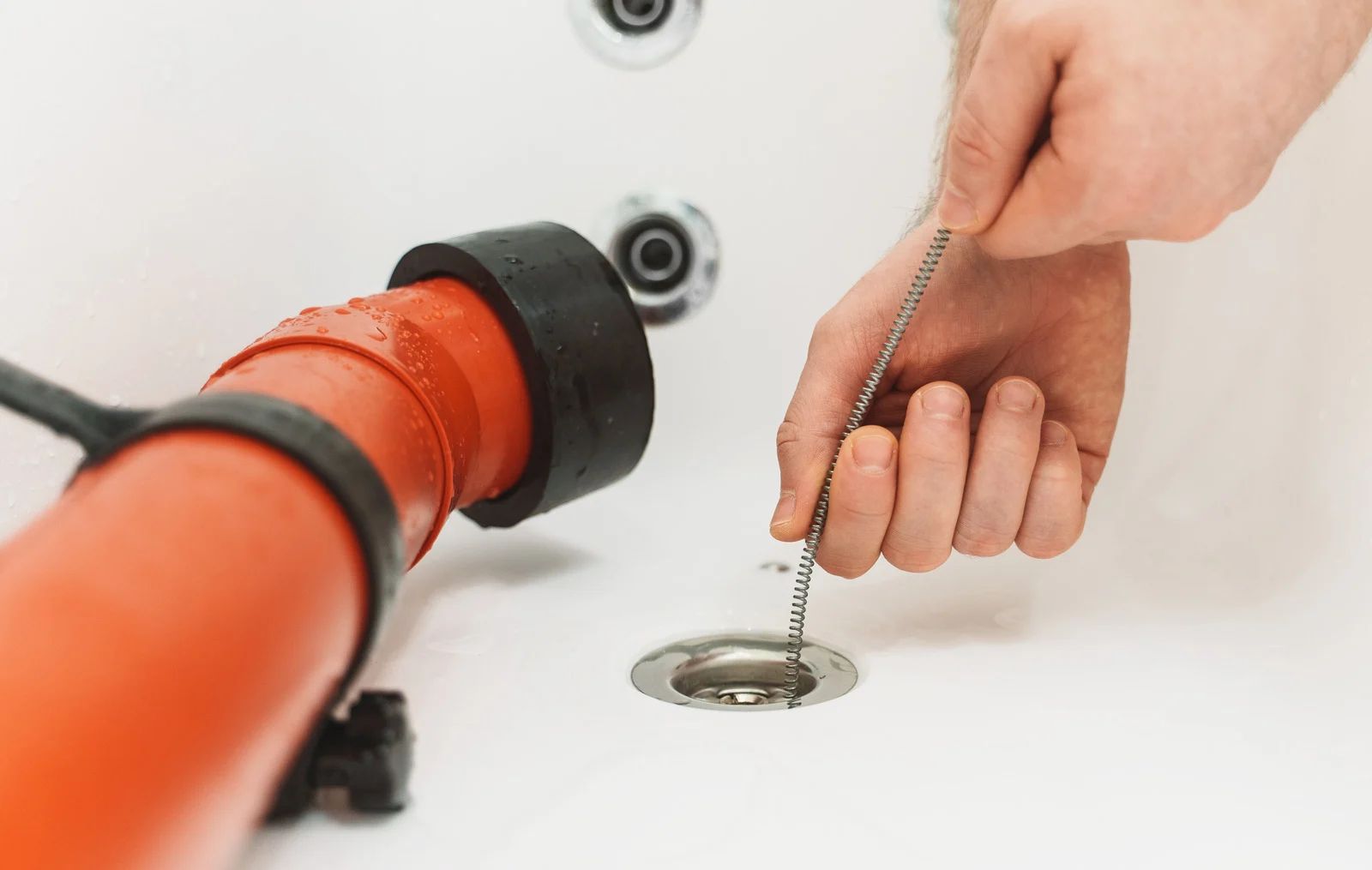
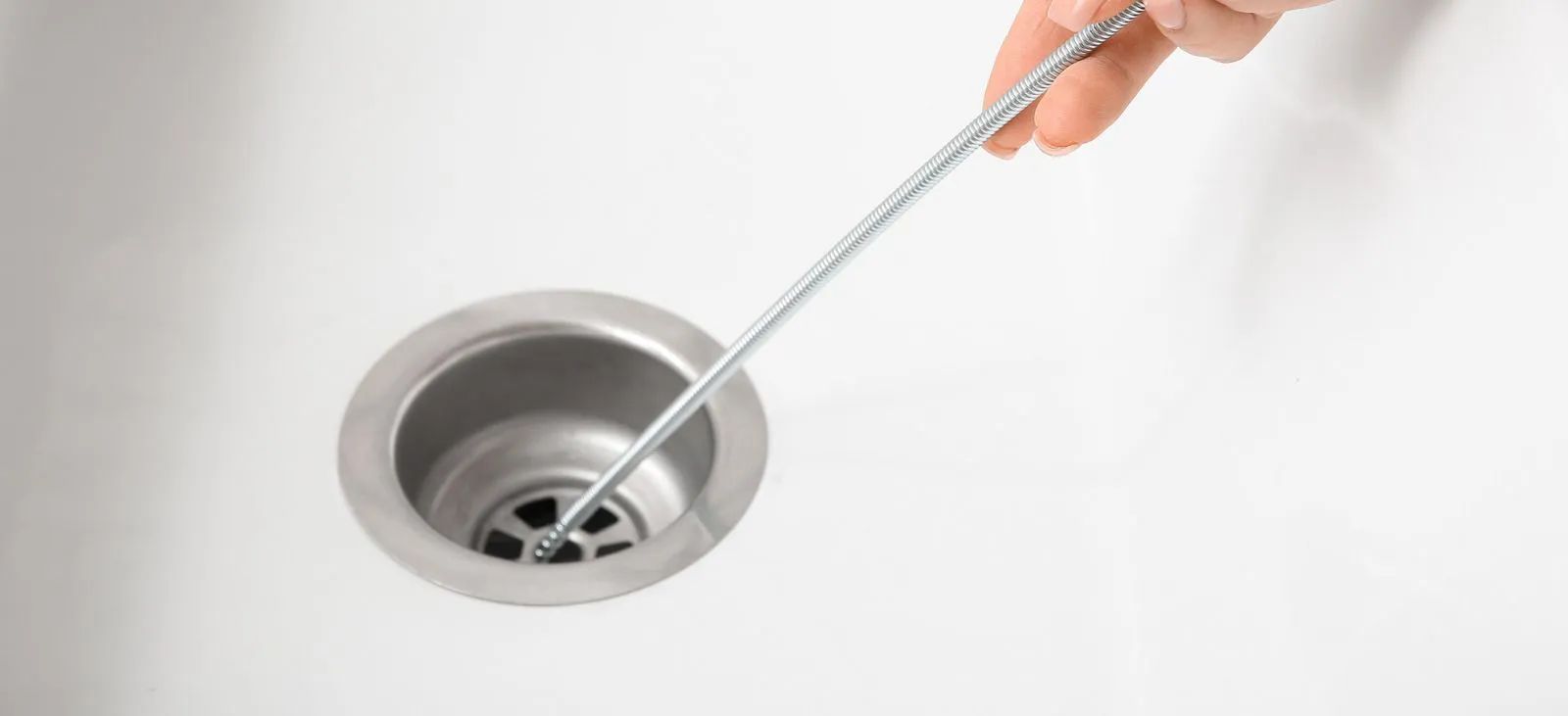
A hair clog sitting close to the surface, wrapped around a stopper or just past it, is usually a job for a drain snake or a cable. The tool grabs the tangle and pulls it out, or breaks it apart enough for water to move again. Because the blockage tends to sit near the opening rather than deep in the line, mechanical removal reaches it without much trouble.
A kitchen line coated in grease behaves differently. Snaking can punch a hole through the middle of that coating and get water flowing again, but the layer lining the rest of the pipe stays put, waiting to narrow the opening again within weeks. Hydro jetting, which uses a high-pressure water stream to scour the entire interior of the pipe rather than just cut a path through the blockage, reaches that coating directly. It's often the better call for kitchen lines with a history of slow drains or repeat clogs, and for any line where grease has had years to build.
Sewer lines serving a kitchen with heavy, ongoing grease use sometimes call for the same jetting approach even further downstream, past where a snake would typically stop.
WARNING: A drain that gurgles, backs up in more than one fixture, or keeps clogging in the same spot within weeks of clearing it usually isn't a simple kitchen-versus-bathroom issue anymore. That pattern points toward a shared line problem further down the system, and it deserves a camera inspection rather than another round of the same fix.
Keeping Each Type of Clog From Coming Back
Kitchen prevention starts before anything hits the drain. Scraping plates into the trash before rinsing keeps most grease and food solids out of the pipe entirely. Running hot water for a few seconds after washing greasy dishes helps carry fat further down the line before it has a chance to cool and stick. And a disposal works best with a steady stream of cold water running the entire time it's on, not just a quick splash at the start.
Bathroom prevention looks almost nothing like that. A mesh drain cover catches hair before it reaches the stopper, and clearing that cover out weekly stops it from building into a mat. Rinsing soap residue with hot water after a shower cuts down on the film that hair clings to. In homes with especially hard water, a water softener addresses the mineral side of the equation that soap scum depends on, cutting down on buildup in bathroom lines and kitchen lines alike.
Two different habits, because two different problems are forming behind the walls.
Frequently Asked Questions
Can I use a chemical drain cleaner on both kitchen and bathroom clogs?
You can pour it down either one, but it won't perform the same way. These products break down grease better than they break down hair, so a bathroom clog built from hair and soap scum tends to resist the reaction that clears a greasy kitchen line.
Why does my kitchen sink clog faster than my bathroom sink?
Heavy cooking, frequent dishwashing, and disposal use all send more material down a kitchen line on a given day than a bathroom sink typically sees. Grease also narrows a pipe faster than hair does, since it coats the entire interior rather than catching in one spot.
Does a garbage disposal prevent grease clogs?
No. A disposal breaks food into smaller pieces, but it has no effect on grease that's already liquid or already coating the pipe. Fat still cools and sticks to the walls whether the food around it was ground up first or not.
What's the real difference between drain snaking and hydro jetting?
Snaking uses a cable to grab or break through a blockage, clearing a path for water to move again. Hydro jetting uses high-pressure water to clean the entire inside surface of the pipe, removing buildup along the walls rather than just opening a channel through the middle of it.
Why do bathroom drains clog even in a house with short hair or no hair at all?
Soap scum builds up on its own, especially with hard water in the mix. Even without much hair to catch it, that mineral-and-soap film narrows a pipe over time and gives whatever hair does go down somewhere to stick.
Is it normal for a bathroom drain to smell different from a kitchen drain when it's clogged?
Yes. A grease-clogged kitchen line often smells like spoiled food or rancid fat, since organic matter is trapped and breaking down inside the pipe. A bathroom clog tends to smell more like mildew or standing water, closer to what forms when soap scum and hair sit wet for an extended period.
What Actually Clears A Clog For Good
A kitchen clog and a bathroom clog might live under the same roof, but they never come from the same material or respond to the same fix. Grease clings to a pipe wall in layers that thicken over months, while hair and soap scum tangle into something closer to felt near the drain opening. Reaching for the same bottle or the same tool for both is how a clog keeps coming back within weeks of clearing it the first time.
Drain Squad A Plumbing & Drain
has spent 21
years tracing clogs to their actual source for homeowners across Litchfield Park, AZ, where hard water and heavy kitchen use both play their own role in what builds up behind the walls. That distinction between a grease problem and a hair-and-scum problem is what decides whether a snake, a jetting pass, or a camera inspection actually solves it. Getting that call right the first time is what keeps a fix from being temporary.